Insights
Insights
Understanding the complete lifecycle of long-term incentives in listed DACH companies

Study by: Andreas Berner, Head of DACH Optio Incentives & Olga Beregova, Partner at HCM
Granted but not given
Companies invest significant effort in designing long-term incentives: defining award structures, setting performance conditions and managing the path to vesting. Yet once an award vests and becomes personal wealth, the nature of the incentive changes: company design gives way to individual choice.
This study examines 393 listed companies across Germany (DAX, MDAX and SDAX), Switzerland (SPI) and Austria (ATX Prime), covering LTI prevalence, design and performance conditions as well as post-vesting behaviour.
Most LTI analysis stops at vesting. This study extends the lens beyond it, linking the way incentives are structured with what executives do once vested awards are theirs to retain or realise.
The result is a more complete view of how long-term incentives operate in practice and a basis for considering what current patterns may mean for future LTI design.
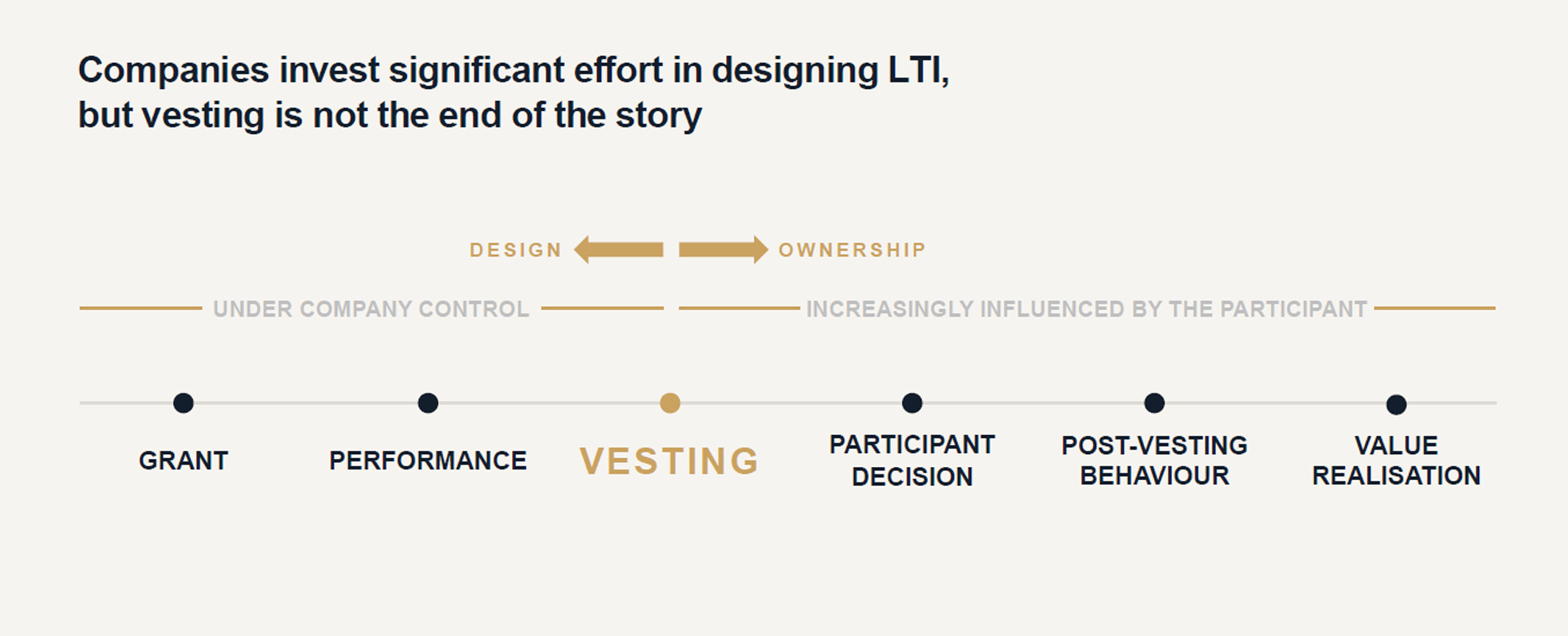
To understand the full lifecycle, we start with a simple question: What shapes LTI design?
LTI design is influenced by three key company characteristics: geography, industry sector, and market capitalization. The analysis covers 393 companies across Germany (159), Switzerland (197), and Austria (37), representing a broad range of industries and business environments.
Companies span 11 sectors and four size categories, from small-cap businesses below €1bn to mega-cap companies above €20bn. These differences help explore whether company characteristics simply describe the sample or explain variations in LTI design.